As important as program design is, your grant proposal will often hinge on a persuasive needs statement. This is where funders decide if your community genuinely needs their money or if you're just another organization with a good idea but no proof. On top of the dozens of other things grant writers are doing, how are you supposed to make time to do deep research into data sources? With the right tools you can spend minutes getting the Census data that will convince funders to award you their grants.
What Do Grant Funders Want to See?
The short answer: proof. Proof that you are serving a real need. But not just any proof, they want both the hard numbers and the human story. Statistics alone feel cold and detached. Stories alone feel anecdotal and unverifiable. The magic happens when you weave them together.
First Nations Development Institute, a foundation that has awarded over $100 million in grants to Native American communities, puts it directly in their guidance for applicants: "Include both qualitative and quantitative data, statistics, and anecdotes that engage the reviewer both rationally and emotionally in the story of your organization's work."
That phrase, 'rationally and emotionally', is the key. Let's look at how this works in a real grant application. The University of Kansas Community Tool Box publishes a sample grant application for healthcare access that weaves census data with human stories throughout:
"In 1996, the official figure published by the Census Bureau for Hispanics was a population of 3,466, or 1.8% of the population... The Census Bureau states that the Hispanic population of Durham grew by 11% from 1995–1996, and the number of Hispanic children in schools jumped by 25% during the same time period."
That's the quantitative foundation. But the same proposal includes a letter from a local priest that delivers the emotional weight:
"As a priest, I am privy to many of their difficulties, and it strikes me time and again how many of these problems are due to a lack of adequate health care... Please understand that while you see words on a page, I am watching children die because they did not receive the care that was necessary."
The census statistics establish scope and credibility. The priest's testimony creates urgency. Together, they make a case that's impossible to ignore.
Now comes the hard part: getting the data. Let's say you're writing a grant to address poverty and homelessness in Cleveland. You need the last 10 years of poverty rates to show the trend. Here's what that looks like.
How do we get data from Census.gov?
Pulling Census Data from census.gov can be a time consuming and confounding process but it's worth it for the valuable data. Skip to the next section if you want to spend less time on this work.
1. Locate the Data
First you need to find the data that you are interested in.
- Go to data.census.gov
- Search for “Poverty”
- Click “Tables” in the top navigation
- Select S1701
- Click “View All 26 Products”
- Select 2023: ACS 5-Year Estimates Subject Tables
- Click “More Tools” and select “Geos”
- Search for “Cleveland” and select the first option
- Click “Download”
- Repeat this process for all ten years
2. Pull Relevant Data
Now we need to go into each spread sheet and pull relevant data.
- Open the first spread sheet
- Go to the Data Tab
- Get the Percent below poverty level. This is our poverty rate.
- Repeat for all ten years
3. Create Reporting
Create a new spreadsheet with this data and the year. Use Excel or Google sheets to create graphs and tables.
That's 30+ clicks, 10 separate downloads, and manually copying numbers from spreadsheet to spreadsheet. If you need data for multiple indicators across different years? Multiply everything by however many metrics you're tracking. The grant is due Friday. It's Wednesday night. You get the picture.
How do we get data from CensusBuddy.com?
Getting the same data from CensusBuddy is a much quicker and less painful process.
- Go to CensusBuddy.com
- Type “Create a bar chart and table of poverty rates for Cleveland for the last 10 years.”
- Press enter
That's really it! It takes about 20 seconds and CensusBuddy will provide a written analysis of the data, a table of the values, and a bar chart showing the trend over time. That 13-step manual process? It just became a 20-second conversation. But CensusBuddy doesn't just hand you raw numbers. It analyzes the data, identifies trends, formats everything for your grant, and provides the proper citations funders expect. The data is pulled directly from the Census Bureau's API, so you know it's current and accurate.
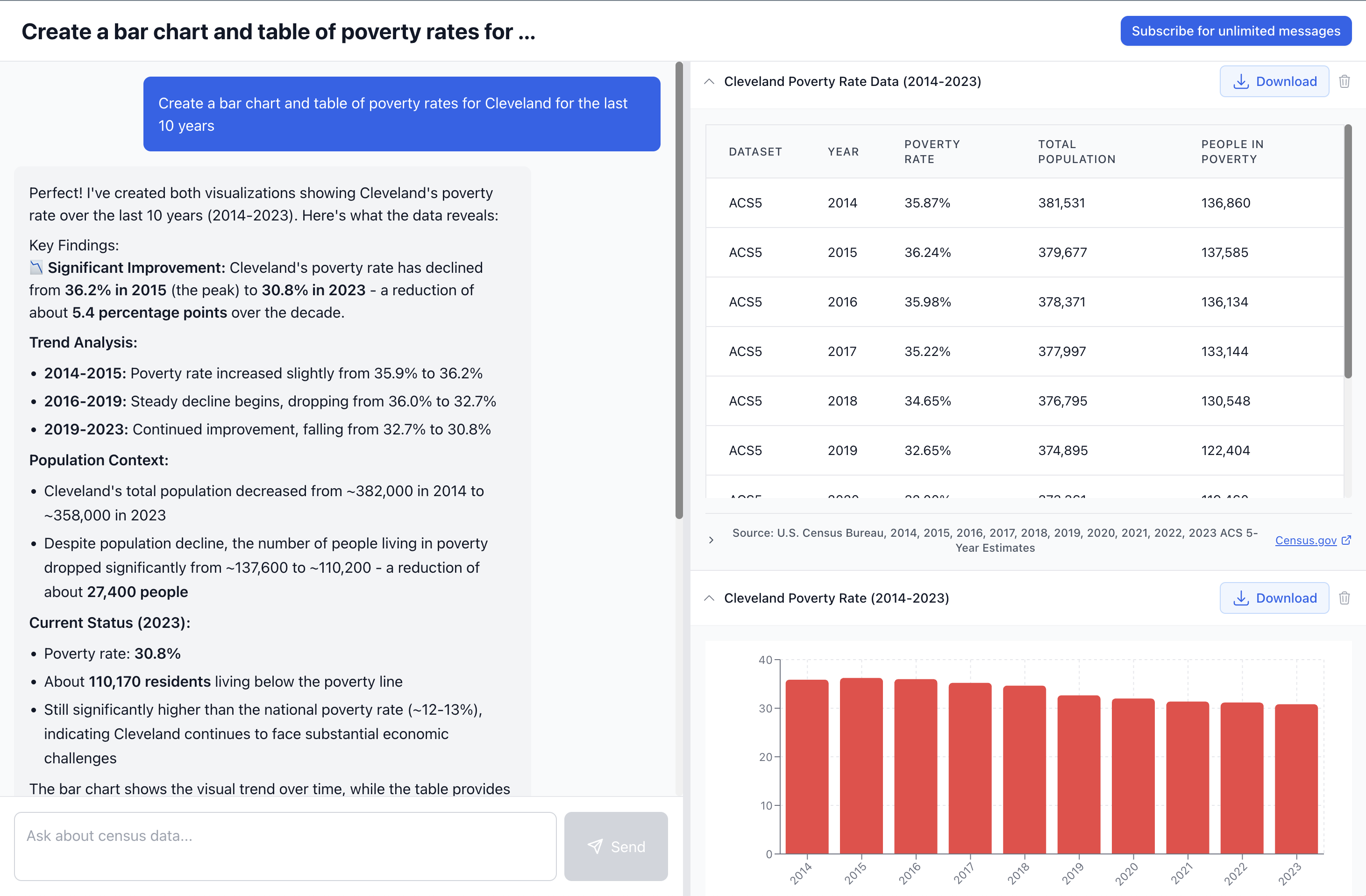
Reports
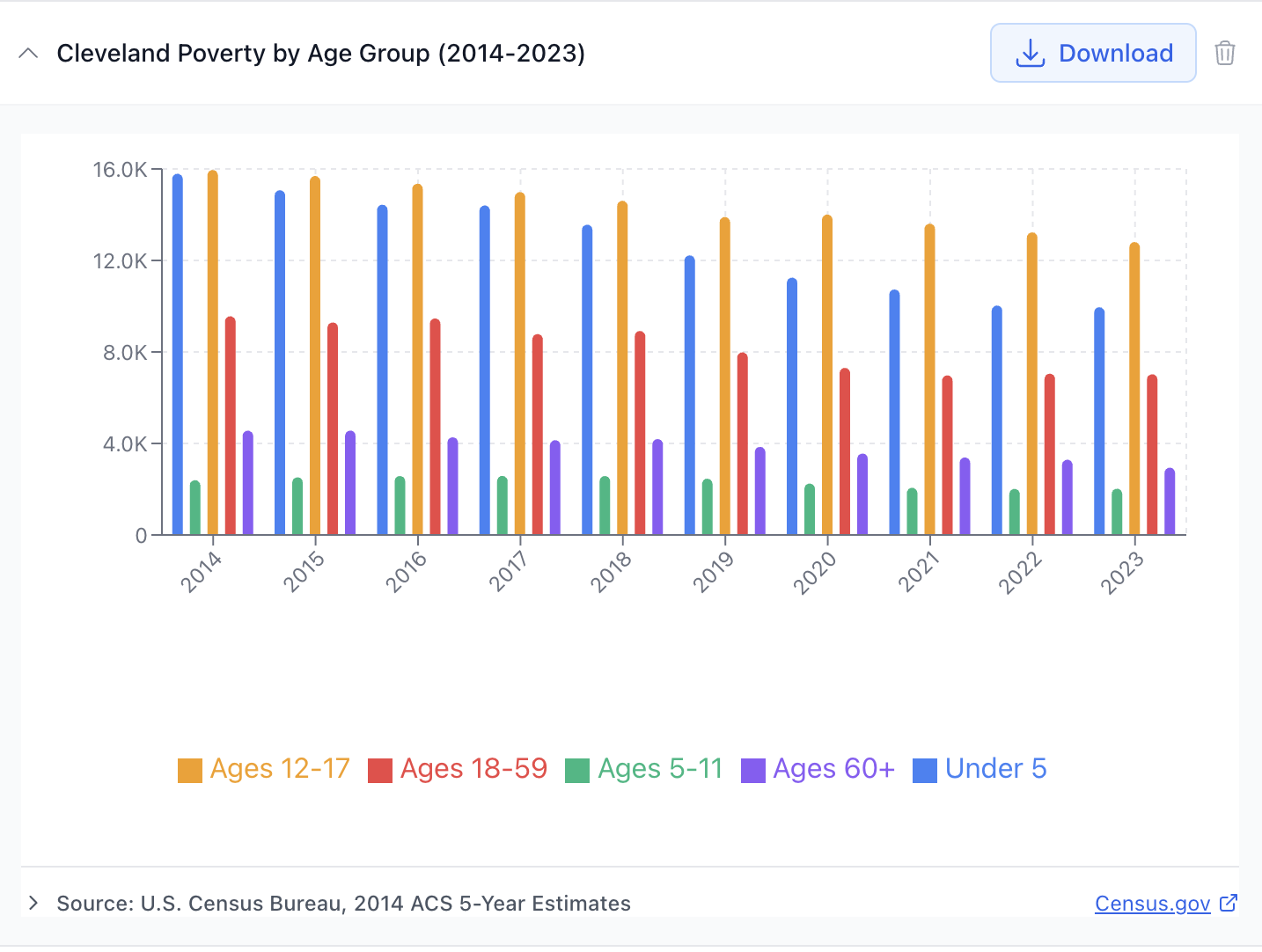
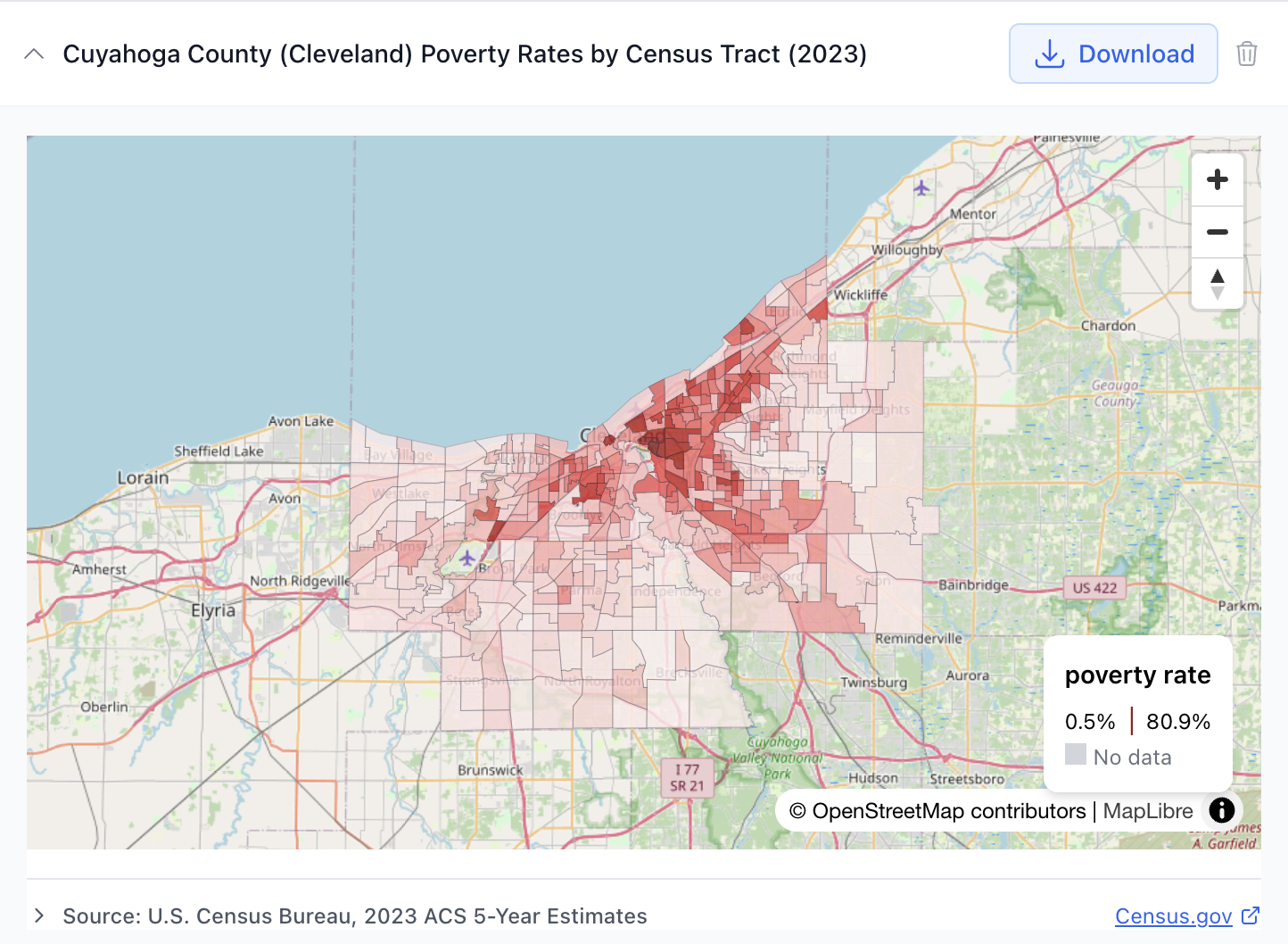
Each report is downloadable in 2 clicks and ready to insert into the grant. You can work with the AI for deeper research as well. For example you can try saying, "Create a bar chart that shows this data by age group over the last 10 years" or "Create a map of overall poverty by block group in cleveland", the AI can automatically generate the analysis that you need.
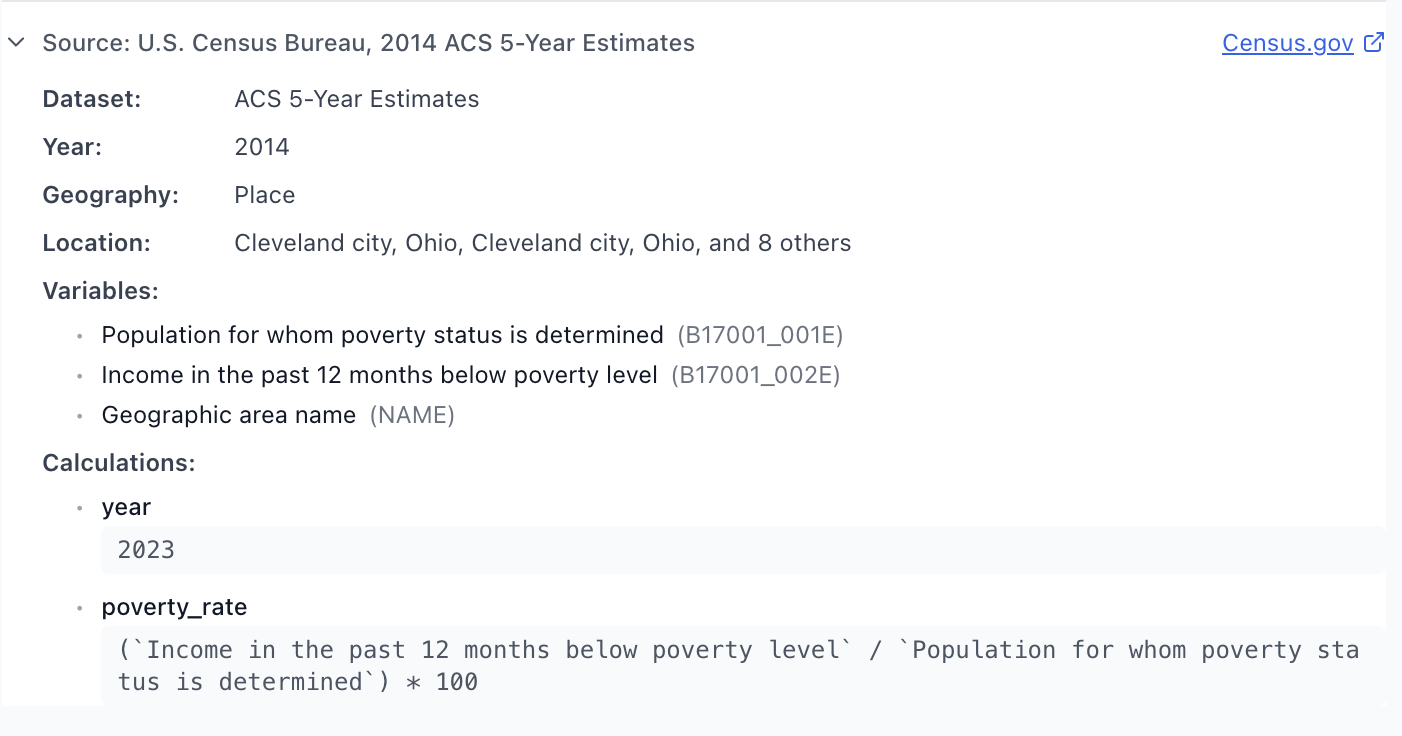
Citations
Each report comes with citations that show exactly where the data is coming from and what variables and calculations are used to generate the final result.
Conclusion
We began by acknowledging that the needs statement is an impactful place that can impress funders. The census data that makes your case bulletproof doesn’t need to be the thing that eats all your time. A process that used to take an hour or more now takes 20 seconds. That's time back for the stories, the program design, the budget… all the pieces that need your expertise, not just your ability to wrangle spreadsheets.